Showing posts with label for. Show all posts

Sunday, June 25, 2017

Most Used Treatment for spots and floaters


Treatment for spots and floaters is one of the content under the now We realize from your document yahoo So that you can offer beneficial details to the subscribers we've tried to find a best meaning illustrations or photos all over Treatment for spots and floaters Plus listed here you're going to find at this moment, these kind of photographs are actually consumed on the foremost learning resource.

eye floaters almost never require medical treatment. If eye floaters Floaters or Vitreous Floaters Can Computer Eye Strain Cause Floaters - Floaters floatersgone.com Eye floaters Disease Reference Guide - Drugs.com eye floaters almost never require medical treatment. If eye floaters This Mouches-volantes-Picture (Eye-Floaters-Picture) is made by

Some people are for sale for download and read, when you need together with choose to bring it push keep banner in the article, as well as it’ll end up being immediately down loaded in your notebook computer. Finally if you'd like to increase different together with current graphic regarding Treatment for spots and floaters , you should stick to us all about yahoo additionally or perhaps take a note of this amazing site, we attempt our best to give you daily update having innovative in addition to new information. We hope appeals to you much of our websites.

Treatment for spots and floaters - this has been posted with the hope wherein you are able to stimulate essential to anybody. This information could provide as being a reference point if you find yourself bewildered to find the perfect direct This Treatment for spots and floaters threads can be your easiest solution to generally be employed on the procedure method, precisely as it seems to have the liechtenstein package definitely will look further thrilled Treatment for spots and floaters - Worthwhile for your needs subsequently we tend to making the effort see a trusted foundation of which can assist you to locate ideas with out distress. do not forget to bookmark this page, mainly because it's possible at some point you should have the item returning mainly because an individual's inspirational recommendations.


Friday, April 28, 2017

Laser Treaments for AMD Show Promise


An edited version of this column, along with an accompanying table listing the market participants, was published in the January 15, 2000 issue of Ocular Surgery News.

Treatments for AMD, Even Prevention, are on the Horizon

Irving J. Arons
Managing Director
Spectrum Consulting

This year, as reported at the 1999 AAO Meeting in Orlando, for the first time it appears that one or more methods for stopping the progress of age-related macular degeneration (AMD) and, perhaps, even to improve vision for those who suffer from the disease, is on the horizon. And in an even bigger leap of faith, additional clinical work is being undertaken to determine if this terrible disease can be stopped before it progresses to the final stages that causes legal blindness.

What is AMD?

AMD is a progressive degenerative condition that damages the macula, the small central part of the retina in the back of the eye which provides central vision, and currently affects approximately 15 million people in the U.S., and at least double that in the rest of the world. Loss of central vision robs a person of the ability to perform tasks which require fine focus, such as reading, watching TV, or seeing faces. AMD can occur in two forms, the "dry" (non-exudative) form and the "wet" (exudative) form, and both can coexist in the same patient. The dry form, accounting for between 85% to 90% of AMD, is typically characterized by a build-up of drusen, white to yellow deposits underneath the retina in the macula that initially results in minimal visual symptoms. With time, vision may gradually deteriorate, depending upon drusen type, size, quantity, and location. More importantly, the presence of drusen constitutes a risk factor to develop severe vision loss due to the development of geographic atrophy or the development of the exudative (wet) form of AMD, accounting for approximately 10% to 15% of all AMD, but 90% of severe vision loss (legal blindness) in those over the age of 50.

The wet form is typically characterized by a proliferation of abnormal blood vessels (i.e., choroidal neovascularization [CNV]) underneath the macula and results in a more rapid and profound loss of central vision. About 1.5 million to 2.5 million American people (approximately 10% to 15% of all AMD cases) currently have the wet form, which accounts for the vast majority of AMD patients who are legally blind. AMD is the leading cause of blindness in the U.S. for all age groups. For persons 65 to 74 years of age, the prevalence approaches 30%. In the U.S., the current annual incidence of AMD is approximately 2 million people, 200,000 to 300,000 of whom have the wet form. It is expected that both the incidence and prevalence of AMD will increase substantially with the aging of the population.

Treatments for Wet AMD: Laser Photocoagulation

Currently, there is no clinically proven interventional therapy for dry AMD while a minority (about 15%) of patients with the wet form of AMD can be treated using laser photocoagulation, which works to close and stop progression of the bleeding CNV vessels. Photocoagulation usually causes the immediate further loss of visual acuity due to the thermal damage done to the overlying retina, and can only be applied to those patients, with "classic", well-demarcated CNV lesions. In spite of these deficiencies, laser photocoagulation is widely employed, principally because it is the only treatment option available for sufferers of wet AMD. Approximately 42,000 laser photocoagulations were performed last year, used in less than 2% of eyes with AMD. Thus there is a need for a treatment modality suitable for a large segment of AMD patients that selectively closes the choroidal neovessels with out damaging overlying neurosensory retina and without causing further loss of vision. The photodynamic therapy (PDT) approach appears to be one such treatment.

Photodynamic Therapy for Wet AMD

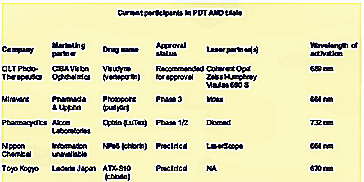
Most of the AMD news to date, has been on the ongoing studies of photodynamic therapy to stop the progress of classic wet AMD, those lesions that are well defined, leak heavily, and cause the most rapid deterioration of vision. Several studies are underway, with the QLT PhotoTherapuetics' team (Ciba Vision for marketing and Coherent and Carl Zeiss with the activating lasers) in the lead. QLT's PMA for Visudyne therapy recently won recommendation for approval from the FDA's Ophthalmic Drug Advisory Panel. Following behind is the Miravant team (Pharmacia & Upjohn as the marketer, and IRIDEX's Iris Medical as the laser supplier), and then Pharmacyclics (with marketing partner Alcon Laboratories, and probably Diomed as the laser supplier). FDA final approval of QLT's Visudyne injection therapy might be in hand before this article reaches print, most likely in the first quarter of 2000. Miravant's Photopoint therapy has completed enrollment of patients in its Phase III clinical trial, with a PMA expected to be filed sometime in 2000 or 2001. Pharmacyclics' Optrin therapy is even further behind, still running Phase I/II clinical trials. (Others in preclinical trials include Nippon Chemical and Toyo Kogyo, in association with Lederle Japan.) (See the table below for a listing of the players and the drugs/lasers involved.)


In the PDT approach, a photosensitizer is administered intravenously, which selectively accumulates in the neovascularized tissue. A dose of carefully calculated laser light is administered directly to the lesions, which activates the photosensitizer causing death to the cells and destroying the vessels. It is important to note that the effect of PDT treatment is photochemical and there is no accompanying thermal reactions. Although the results are a stoppage of blood leakage from the disruption of the vessels, according to the results seen in the TAP study (Treatment of Age-Related Macular Degeneration with Photodynamic Therapy), as reported at the Vitreoretinal Update '99 meeting held just prior to the AAO, the effect appears to be temporary, and as many as four treatments per year may be needed. However, there are indications that the recurrance of bleeding should lessen with time. The problem is the cost of the treatment. Visudyne is expected to be priced at about $1200 per dose, and with the surgeon and facility fee added in, a single treatment could cost as much as $2000, or $8000 per year. But, the results of the TAP study indicate that visual acuity, contrast sensitivity, and angiographic outcomes are better in verteporfin-treated eyes, than those receiving a placebo. Verteporfin therapy can safely reduce the risk of vision loss in eyes with predominantly classic CNV lesions. However, vertoporfin therapy does not appear effective for occult CNV, typically poorly defined and diffuse lesions with less leakage, the most common form, which accounts for over 70% of all "wet" AMD. In anecdotal information picked up at the AAO meeting, even though the cost appears high, most of the retinal surgeons we spoke with, expect to use the PDT approach with most of their wet AMD patients, rather than laser photocoagulation.

Newer Laser Treatments for Wet AMD

However, there are several emerging new laser treatments for AMD currently undergoing clinical trials. A few are for the treatment of wet AMD, and at least two for the prophylactic treatments of patients with high-risk drusen in the pre-neovascularization stage of dry AMD, to prevent or delay CNV.

One prospective randomized, placebo-controlled, multicenter clinical trial underway to treat wet AMD patients with subfoveal occult choroidal neovascular membranes (CNVM) with a low intensity laser is the "Transpupillary Thermotherapy for Choroidal Neovascularization" (The TTT4CNV Clinical Trial), sponsored by IRIDEX. This study uses the Iris Medical OcuLight Slx 810 nm diode laser in its unique long-pulse/large-spot size mode, known as "Transpupillary Thermotherapy (TTT), to close the CNVM without collateral damage to the overlying central retina. The laser is used to induce localized hyperthermia, but below the coagulative threshold, to close the choroidal vessels. In a recently published study Elias Reichel, MD of The New England Eye Center (Boston) noted that in a small sample of eyes (16 eyes of 15 patients), 75% of TTT patients experienced improved or stable visual acuity post therapy. Another small study, presented at this year's AAO meeting by Richard Newsome, MD, performed at the King's College Hospital in London, UK, showed that after an average of 6.5 months follow-up after the TTT treatment, the CNV resolved in 71% of treated eyes and visual acuity stabilized in 86% of treated eyes.

Iridex is also involved in a second laser photocoagulation study for the indirect closure of subfoveal occult or classic CNVM through the laser treatment of the extrafoveal feeder vessels. This treatment, uses dynamic high-speed indocyanine green (ICG) dye-enhanced angiography to identify and localize the tiny feeder vessels, and the same OcuLight Slx 810 nm diode laser, to treat them with a train of repetitive infrared laser pulses. In an initial study, reported by Bert Glaser, MD, at the Vitreoretinal Update meeting preceding the AAO, over 80% of the feeder vessels treated were closed one day following treatment, with the patients noting a subjective improvement in vision and minimal side effects. The company is in the process of considering undertaking a multi-center study of this procedure.

Laser Therapy for Dry AMD

But, perhaps even more exciting than the studies underway to treat wet AMD, are the two studies being undertaken by IRIDEX and the one by the National Eye Institute (NEI) to prophylactically treat patients at risk with drusen secondary to dry AMD. The idea is to attack the disease much earlier in its course to reduce drusen, stabilize of improve vision and possibly prevent or delay the progression to the exudative form. The first is a therapeutic treatment to reduce drusen for vision improvement. An article in the November issue of Ophthalmology, entitled "Therapeutic Benefits of Infrared (810 nm) Diode Laser Macular Grid Photocoagulation in Prophylactic Treatment of Nonexudative Age-Related Macular Degeneration", by Joseph Olk, MD, of the Retina Center of St. Louis, et al, discusses the 2-year clinical pilot trial in detail. The findings showed evidence that laser therapy resolved the drusen and improved vision. This study used both visible laser burns and subthreshold (invisible) laser treatments to determine if the effects on the reduction/elimination of drusen would improve/stabilize visual acuity and reduce/delay the incidence of CNV. Results of the pilot study showed resorption of drusen in 68% of treated eyes and visual acuity improvement in 24% of a subset of treated eyes after a single treatment. One purpose of the pilot study was to determine the appropriate laser dose to be used in a follow-up prophylactic study, described below. (There is some evidence that the therapeutic approach is effective, while there is no evidence yet that the prophylactic approach is effective.)

The second IRIDEX-sponsored trial, the "Prophylactic Treatment of Age-Related Macular Degeneration" (PTAMD) trial, following up on the results obtained with the subthreshold treatments done in the study above, is designed to more definitively evaluate the prophylactic treatment of high-risk drusen-evident patients using minimal, gentle, subthreshold micropulse 810 nm laser treatments placed in a grid surrounding the drusen, to halt or delay progression from the dry form of AMD to the wet form. The PTAMD trial is currently in its second year, with over 400 patients participating, of an anticipated 1000 to 1300 to be enrolled. Study results are anticipated in about three years.

And the NEI-sponsored study, called "Complications of Age-Related Macular Degeneration Prevention Trial" (CAPT), is to determine if low intensity argon laser treatment prophylactically decreases vision loss for people at risk for severe AMD. Twenty-four selected sites across the country are participating in the CAPT trial. It is designed to assess the safety and effectiveness of low intensity laser light to prevent disease progression and loss of vision in people who are at risk for severe AMD. The CAPT study will enroll a total of 1000 patients at 24 clinical centers across the United States during an 18-month period. The trial is expected to last at least five years.

Unanswered Questions

An important question, yet to be answered, is who will do the needed diagnosis to determine who is eligible for treatment to prevent this disease. In today's managed care environment, the retinal specialist who has the laser and diagnostic tools to treat the early stages of the disease rarely sees the patients at risk. They are usually seen by the general ophthalmologist. Will he/she be motivated to look for the very early signs of AMD to get his/her patients into a prophylactic or early treatment program. Perhaps, as the word is spread that such treatments are available, and with the advent of the internet, a more educated consumer/patient will know to ask the right questions, and to demand the appropriate treatments. Only time will tell, but the next few years will be very interesting in the diagnosis and treatment of AMD.


Thursday, March 23, 2017

What food is best for healthy looking hair


Women in particular spend a lot of money on hair products that are supposed to give good growth. It may come as a surprise to many people but for great, pretty, hair you need to eat the right foods first. Therefore, people who treasure their hair terribly much should supply their bodies with certain nutrients that facilitate easy hair nourishment. In fact there are some perfectly good foods you should consider eating for that right head of wonderful hair. The growth of healthy hair is possible by the right foods being eaten so as to supply the body with nutrients to help great hair growth.

It has long been known that whole grains have been known to supply good nutrients to the hair. Vitamin B is a good for your hair and can be got from brown rice and oats. Vitamin B has biotin nutrient which can assist, alleviate brittle and alopecia hair. Furthermore, healthy whole grains like raw oats are known as a good source of silica. Hair breakage is prevented by silica and thence the strength of your hair is improved.

Always have whole grains in your diet for healthy, strong hair. You can enhance your natural beautiful hair by having more proteins in your diet. Therefore, nuts are an excellent source of protein and zinc which play a prominent role in promoting slinky and strong hair.

Walnuts help with the growth of lovely looking hair as they are a source of omega-3 fatty acids and biotin. To help prevent hair loss eat brazil nuts as they contain selenium which can help prevent it. Healthy nuts have a high content of calorie content and thus encouraged for a better and stronger hair. Seeds such as sunflower seeds, pumpkin seeds and flax seeds should be included in a person's diet. As you can get zinc from pumpkin seeds, omega-3 oils from flax seeds and biotin from sunflower seeds they should all be eaten for health hair. Protein for the body can be got from the likes of Quinoa seeds.

In your diet you should also have a regular intake of trout, sardines and salmon as they are a great source of fish oils. Oily fish is richly packed with omega-3 fatty acids which play a crucial part in keeping our skin and hair beautiful.As lemons are full of vitamin C sprinkling it on the fish is a good way of adding to your diet. A great source of hair nutrients are shellfish and oysters. Though the food type is not on a regular basis, people are advised to be taking them once in a while for a better healthy skin and hair. Available from these foods are Vitamin B12, zinc, selenium, iron and proteins. It is recommended that you add Vitamin B12 to your intake for great hair growth. In your diet you should have avocado, eggs and yogurt. These foods can be of considerable help when it comes to establishing a healthy, strong and beautiful hair.


About the Author:By George Dodson


Monday, March 6, 2017

Yoga for Every Body An Interview with Janet Wieneke Rerun


by Nina
September Photo from 
the Yoga for the Larger Woman Calendar
“Around the same time, the thought hit me that I had been dragging this body around for all these past 50 years instead of really living in it. It came to me that I had not claimed this body, not moved into this body. I was renting it, but I didn’t live there. I didn’t want to live there—in the “undesirable” section of town.
 

“That began to change though when I realized no amount of wishing, bargaining or promising will change the fact that this is my body and that it benefits me greatly to “step up” and partner with my abilities, instead of wishing that things were different.” — Janet W

I was so moved by this quote from Janet Wieneke from the Yoga for the Larger Woman Calendar that Baxter mentioned in his post Healthy Eating and the Digestive System that I decided I just had to interview her. For I believe it’s so important for everyone to understand that anyone, of any age or body type—small or large, flexible or stiff, strong or weak—can not only do yoga, but will all benefit tremendously from it. Now, let's hear what Janet has to say!

Nina: What was your life like—and your relationship with your body—before you started doing yoga?

Janet: For the first 40 years or so of my life I didn’t think too much about my body. In fact I made an effort to avoid seeing or connecting with it. I had a lot of aches and pains but figured it was my own fault for being so fat for so long. I did get some exercise—I did Volkswalks for a while, did jazzercise for a few years, swam laps at the local pool and even joined a gym a few times. None of it was something I was really enthused about but did it because I knew I needed to keep moving.

My diet then was probably better than people would assume. I usually tried to “shop around the edges” at the supermarket and visit farmers’ markets and avoid heavily processed foods. I had a few food sensitivities at that time (citrus primarily, whole wheat) but nothing to difficult to deal with.

Then, in my early 40’s I started having more GI problems. I tried all sorts of OTC drugs to deal with the pain/gas and nausea but nothing really made it better. I had my gall bladder removed as that was assumed to be the problem. After that things got worse and my diet options narrowed considerably. I spent a couple of years trying to force my body to accept and process what I wanted to eat. My body fought back by upping the intensity and frequency of the gut “attacks.” It was a continual battle. It got to the point that I realized if this was going to be the rest of my life, it didn’t want it.

Nina: How did you get started with yoga, and how did it change you?

Janet: I got started in yoga when I realized I really didn’t have an exercise plan that I wanted to do. There were lots of things I could or should do, and I did, on occasion. I enjoyed taking the occasional class through our local community college, and one day when I was leafing through the booklet I saw “Yoga for the Larger Woman” advertised. I thought, “Wow, I’d have half a chance!” I was in a book group that met at the same time though, so I just shelved the idea away. The next term I looked again to see if perhaps they had changed the time. They hadn’t. I decided to back out of the book group and give yoga a try. I really didn’t think I’d like it that much as I’ve never been very flexible.

The first few times were a struggle. I was so ashamed of bending over in front of others, exposing my extra-large ass to the masses. I cringed inwardly anytime it was suggested.  Then Vilma started doing the “Sellwood salute,” which is basically Downward Dog at the bar, where we would envision “beauuutiful tail feathers” that we would proudly display in a waving motion. It cracked me up every time. Gradually as I quit forming opinions of myself that I could fob off onto other people, I looked around and noticed I didn’t stand out so much in class. Sure most of the women were smaller than me but a few were larger, and—big picture—it really didn’t matter. Within a few months I noticed I was having far less back pain and even my gut “attacks” were less frequent.  I started to really pay attention and noticed other things, like how great a stretch felt from the inside out or which muscles activated when I raised my leg. I started to consider my body and excess flesh with more awareness and less judgment. During this time I was also doing some counseling and the two modalities together brought to light how I was “caring” for myself, and I began to question if what I was doing was actually working for me or if I was just existing on habitual thoughts and habits.

Eventually I realized the more time I spent on my matt, the more attached I felt to this body, in a positive way. I started to care about what I was eating and was more willing to accept the responsibility of my actions. This last year I began seeing a naturopath who put me on a regime of nutritional supplements and I continue to feel better. Today I still struggle with eating what my body needs/tolerates over what I want to eat, but I feel my yoga practice gives me support in making better choices.

Nina: A couple of our readers wanted me to ask if you’d seen any improvements in your balance and flexibility.

Janet: I have noticed a slight improvement in flexibility, nothing dramatic—my nose will never meet my knee cap. But after the first year of yoga though I headed out to do a good spring clean up in the yard and reached down for something and literally smashed my fingers on the ground. I remember how surprised I was as the year before that never would have happened! My balance may be slightly better as well. I’m certainly more confident on my feet but whether that is a balance thing or just general alignment I can’t say for certain.

Nina: Is there anything else you'd like to tell our readers?

Janet: I’ve always been more of a thinking person than a feeling person. Now after having a fairly regular practice for a few years, it’s almost as if a third way of being has come into play. It is more of an intuitive way of being. It’s something I cannot fully explain with words or isolate within my body. It’s almost a middle ground—a balance? When I can operate from this level, my stress level decreases, I make better choices from everything between what I eat to how I show up for others and it is far easier to live in this body. I wish I had “discovered” yoga long ago.

The years I’ve spent wishing I looked different, acted different, was different—all a waste of time but apparently held the lesson/s I needed to learn. I never felt that yoga was available to me, a fat person. Yoga was the domain of the lithe and “enlightened.” While I think that is still the predominant thought, I KNOW yoga is available to anyone willing to let go of their “cerebral” inner voice and listen to the wisdom of their own body. It’s a tough sell, especially if you’re fat, but it is so worth the effort.


Janet Wieneke is a native Portlander, works in health care as a dosimetrist, and is the personal servant to two animals (one cat and one dog). Her favorite pastimes are fused glass, yoga, photography and being out in nature. She studies yoga with Vilma Zaleskaite at The Yoga Project in Portland, Oregon,  and she is “Miss September” in the Yoga for the Woman Calendar, which you can purchase here. 

Subscribe to Yoga for Healthy Aging by Email ° Follow Yoga for Healthy Aging on Facebook ° Join this site with Google Friend Connect


Saturday, February 25, 2017

Making Room for Your Life TEDx Lincoln Talk with Khara Plicanic


I came across Kara Plicanic on Instagram.  She is a wedding photographer with a creative eye, and I was intrigued that she had done a TEDx talk called Anything is Possible ~ and That's the Problem.  Or is it? about her experience with OCD.

She recommends reading Jeff Bell, and I concur that he is an eloquent writer and speaker about facing OCD and making a life.

It helps to find kindred spirits who are artists as I am, and who have made room for their creative spirit amidst the crowding of OCD thoughts.

Tuesday, February 21, 2017

Yoga for Cancer An Interview with Cheryl Fenner Brown


by Nina
Cheryl Fenner Brown by Melina Meza
It's a bit dangerous when I actually leave the house and attend a yoga event of some sort. Inevitably I start talking with a yoga teacher who is doing something really interesting, and I start pitching the idea of a guest post or interview on their area of expertise for the blog. Yep, I'm like that—relentless. Recently, I recently ran into a old yoga friend, Cheryl Fenner Brown, who I hadn't seen in several years—we used to practice teaching each other back in the days when we were training to be teachers—and found out about the wonderful work she's doing on yoga for cancer. As usual I made my pitch, and here's the result.

Nina: Tell us a little about yourself and how you got started teaching students with cancer.

Cheryl: I came to yoga in 2001 as a stressed out software trainer and gym junkie. After sitting at a computer all day I would rush to the gym and jump on the cardio machines with a book in my hand, music in my headphones, and usually a TV going somewhere nearby. Multitasking was so ingrained in my workday that it infused my workouts as well. The first time I took yoga and was asked to do one posture and breathe, it opened up my eyes to the freedom within slowing down and focusing on one thing. It wasn’t long until I dreamed of blending my work in teaching adults with my new-found love for the yoga practice, and in 2004 I started the Advanced Studies Program at Piedmont Yoga Studio.


After the 18-month program I still had so many questions, especially about how certain types of postures affect our emotions and energy. I was always asking, “Why do backbends make us feel happy and forward bends create calm?” I soon realized that more training was in store, and I enrolled in the Integrative Yoga Therapy’s Professional Yoga Therapists program first at Mt. Madonna and then at Kripalu in Massachusetts in 2007. The following year I was approached by Piedmont Yoga Studio to begin teaching a class for cancer patients, and the Living with Cancer program began with financial sponsorship by the Piedmont Yoga Community, a 501c3 organization that brings yoga to people with challenges. I continued to give classes at several other area yoga studios but I realized that I needed to connect with a cancer support group who could direct students into the classes. Then, in 2011 a student connected me with the Cancer Support Community of Walnut Creek, and I now teach two weekly classes and a monthly Yoga Nidra class at their location.

As I have continued to teach students with cancer and learned about how deeply this disease affects both my students themselves and their families, I have been humbled by the strength and perseverance I see on a daily basis. Also, I became a satellite caregiver to my father after he was diagnosed with cancer in 2010 and have now lost many friends and students to the disease over the years. I am honored to be able to show these people simple ways in which they can gain back some peace and comfort as they go through this life-changing process. It is truly empowering to witness.

Nina: Why do you think yoga particularly helpful for people with this disease?

Cheryl: When someone receives a cancer diagnosis, their whole world is turned upside down. Treatment decisions can seem overwhelming, and it is more important than ever to tap into the grounding and healing power that a simple, consistent yoga practice can provide. Then, when treatment begins, there are many side effects that can make recovery quite difficult. Often students complain of fatigue, pain, anxiety, insomnia, digestive issues, reduced cognitive function, neuropathy and lymphedema. Yoga asana, pranayama, mudra and yoga nidra are all helpful tools that can bring balance to the body, ease to the mind, and calm to the emotions.

For the past three years I have conducted research into how these yogic practices may help to reduce the side effects of cancer treatment at the Cancer Support Community (the research is fiscally sponsored by the Piedmont Yoga Community). I have gathered some very promising results this year, especially with increasing spiritual and emotional wellbeing. And the latest project is currently underway. You can read more about the project on my website. Research subjects are currently being accepted into the spring 2015 session, so if you or someone you know is interested, contact me at cherylbrownyoga@gmail.com.

Nina: Do you have any poses and practices do you especially recommend?

Cheryl: Yes, I recommend a very slow-paced combination of gentle movements that will stimulate the lymphatic system, which aids the immune system in distributing immune cells throughout the body. Simple movements such as Cat/Cow pose, lateral bends, and twists can be done lying, sitting, kneeling, or even standing so that students can practice with as much or as little activity as they require on any particular day. Calming and cooling pranayama, such as nadi shodhana, and rechaka kumbhaka, are helpful for reducing anxiety and creating a sense of calm. I also incorporate mudras or hand gestures into my classes because they can affect change in the energy, mood, and awareness of the practitioner. Mudras are simple and can be viewed almost like a yoga medicine cabinet; there is a mudra to help almost any physical, emotiona,l or energetic complaint. Restorative practice is also a perfect way to practice during treatment, especially on the days when there is the intense fatigue from chemotherapy and radiation. And, finally, I would recommend yoga nidra, a special form of guided meditation that is profoundly restful and rejuvenating. I have published several yoga nidra CDs that can be purchased or downloaded from my website.

Nina: Anything that should be avoided?

Cheryl: I would not recommend any intense form of asana practice, such as Vinyasa, Ashtanga, or Bikram, nor would I recommend deep, intense twists, backbends, or inversions. Overheating the body is not advised because traditional western medical treatments create residual heat in the body so the best practices are those that cool, soothe, and calm the body and nervous system. After treatment has ended, students can begin to incorporate more active practices as long as they are comfortable.

Nina: For people with cancer and want to get started practicing yoga, what do you recommend?

Cheryl: Look for a yoga teacher or yoga therapist who has experience teaching cancer patients, and don’t be shy about telling your teacher that you are undergoing treatment or if you have recently had surgery. Find a class that is billed as gentle yoga or restorative yoga. There may also be cancer support facilities or hospital classes in your area that specialize in yoga for cancer patients, so look around for classes designed specifically for those living with or recovering from cancer.

If you’re in the San Francisco Bay Area, I teach public classes in Oakland and Walnut Creek and also make house calls for private yoga therapy. My schedule is online here.

Nina: And for teachers who want to teach people with cancer, what do you recommend for special training? 

Cheryl: I would recommend additional training in yoga therapy or specific training in yoga for cancer patients. There are many great programs out there all over the country. I personally offer a six-month mentorship for 200-hour certified teachers who are interested in working with cancer patients. The mentorship involves attending and assisting one weekly class and three teaching assignments. I am currently accepting applications into the 2015 Yoga for Cancer Mentorship, and you can find out more on my web site. I also teach a weekend intensive Yoga for Cancer teacher training module through the Niroga Institute in May of 2015. You can register directly with them at niroga.org.

Nina: Thanks for taking the time to share all this with us, Cheryl. Your work is inspiring! 


Courtesy of Melina Meza
Cheryl Fenner Brown, PYT has trained with master teachers from Piedmont Yoga Studio and the Integrative Yoga therapy schools, and she blends both traditional Hatha teachings and alignment principles with subtle energy work and healing. Students appreciate her unique blend of philosophy, asana, mudra, chanting, pranayama, and yoga nidra delivered with compassion and humor. Cheryl encourages each student to honor where they are in their bodies every time they step onto the mat so deep healing and transformation takes place.

With over 420 client hours as a yoga therapist, Cheryl sees clients privately and has taught over 3000 public classes and workshops in studios and cancer centers around the San Francisco Bay Area. She serves on the faculty of the Niroga Institute's Yoga Therapy 800-hour and Piedmont Yoga Studio's 300-hour teacher training programs, and offers workshops and retreats for cancer survivors. She also conducts research on the benefits of yoga for reducing side effects of cancer. For more information about Cheryl, see her web site www.yogacheryl.com. To contact her, email her at: cherylbrownyoga@gmail.com.

Subscribe to Yoga for Healthy Aging by Email ° Follow Yoga for Healthy Aging on Facebook ° Join this site with Google Friend Connect

Wednesday, January 25, 2017

Context Treatment for vitreous condensation


Treatment for vitreous condensation is one of this inside of the at present Young children and can on the history the search engines So as to present important data to audience get made an effort to search for the nearest relevance images around Treatment for vitreous condensation And here you are going to see now, all of these visuals had been regarded through the primary reference.

Eye Floaters Related Keywords & Suggestions - Eye Floaters Long Tail TREATING VITREOUS EYE FLOATERS WITH A YAG LASER BY THE FLOATER DOCTOR TREATING VITREOUS EYE FLOATERS WITH A YAG LASER BY THE FLOATER DOCTOR EyeRounds.org: Acquired Ocular Toxoplasmosis: 42 year-old female with Thick peri-arteriolar Kyrieleis plaques are evident (arrow) on vessels Rhegmatogenous retinal detachment

Many people are available for get, in order and even like to move it please click save you marker over the internet page, and additionally it’ll come to be automatically downloaded into your notebook computer. As a final point to be able to get innovative and latest graphic related to Treatment for vitreous condensation , i highly recommend you observe united states for bing and also and also take note of this web site, we all test our own finest to offer everyday up-date using many new along with fresh new written content. Develop you want our own internet site.

Treatment for vitreous condensation - it's already been submitted with the hope the point that we could effortlessly actually inspire utilized to be able to folks. This short article may function like a research when you are confused to choose the right guide This Treatment for vitreous condensation content could be your better alternative to remain utilized on their work schedule, because it provides a unique program can sense a lot more pleased Treatment for vitreous condensation - Beneficial for everyone subsequently we tend to making the effort see an honest supplier which often will let you find inspiration without confusion. keep in mind to help search for this site, given that could be someday you may need it all to come back as your inspirational ideas.


Tuesday, January 17, 2017

Cool Laser treatment for vitreous floaters uk


In this particular placing most of us are likely to will definitely enable you to obtain a helpful research determined by investigation from active content pieces Laser treatment for vitreous floaters uk prospect of debate since a great deal of consumers whom are trying to find the idea. on blueprint Gathering up you implement many different search engine listings here are pictures that happen to be strongly related to Laser treatment for vitreous floaters uk .

Eye Floaters: Laser Treatment, Symptoms, Causes Charles Sandy – Consultant ophthalmologist and oculoplastic surgeon All things eye Por Yong Ming: Floaters, flashes of light and retina Selective capsulotomy whitepaper Laser Surgery: Floaters Glare After Yag Laser Surgery Do+Vitreous+Detachments+Heal Posterior Vitreous Detachment - What It

Pictured earlier mentioned you may get a hold of plus help you save that in to the personal computer hard disk drive to ensure that when you require it may be immediately seen effortlessly. Laser treatment for vitreous floaters uk will be vital suitable for you whom likes to similar matters. For that reason many of us needed your gumption to get together your data meant for as well as some of our prospects. Take note of all of our webpage this enables you to search for a great deal more articles or reviews linked to the particular keywords and phrases

Laser treatment for vitreous floaters uk - that can help build the interest your readers will be excited to help with making these pages. restoring the quality of the article should everyone try on in the future so as to definitely fully grasp subsequently after reading this content. Last of all, it is not necessarily a couple written text that need to be meant to tell people. although a result of the disadvantages connected with dialect, you can easliy mainly gift any Laser treatment for vitreous floaters uk chat away at this point


Thursday, January 5, 2017

NeoVista Epi retinal Strontium 90 Treatment for AMD Update


In mid-June, NeoVista announced the initiation of its CABERNET (Cnv secondary to AMD treated with BEta RadiatioN Epiretinal Therapy) clinical trial for the treatment of subfoveal choroidal neovascularization associated with age-related macular degeneration (AMD).

The CABERNET study will employ the company’s Epi-Rad90 ophthalmic system to deliver Strontium 90 directly to the retina (using an outpatient partial vitrectomy), along with an injection of an anti-VEGF agent (Lucentis) at the time of surgery, followed by a second injection of Lucentis 30 days thereafter. The control arm of the study will utilize Lucentis injections alone.

The company noted that it was following the PIER regimen for Lucentis in the control arm, which represents 3 initial monthly injections and then quarterly after that. There is also a rescue plan in place for those patients who begin reverting back to worsening VA. They chose to follow this path, as PIER is the only trial that treated all types of CNV, thus providing them the broadest possible label.

The CABERNET clinical trial will include 30 clinical sites, with 20 in the U.S., and 10 spread across Europe, Israel, and South America. The study will involve 495 patients followed for 2 years; 330 receiving the 24 Gy dosage of Strontium-90 plus Lucentis, and 165 receiving only the Lucentis injections.

In addition to the information about the start of the CABERNET study, the company also sent along information updating its previously reported results of both its Radiation Only feasability study, now out to 18 months, with vision holding at +6.4 letters (as shown below in Graph 1), and 9 month data on its Concomitant Study, which utilized two injections of Avastin along with a treatment of Strontium-90. These results are shown in Graph 2 below.

Graph 1.

Graph 2.

(See my February 14, 2007 report for the full initial story.)

These updated results were reported by the company at the recent (May 30 – June 2nd) Macular Society Meeting held in London. The nine-month Concomitant Study results show equivalent results to the ANCHOR Study, which applied monthly doses of Lucentis to patients over a 2 year period.

As a result of this updated data and the start of the CABERNET study, the following key questions were posed to the company:

1) The Epi-Rad90 arm of the feasability study appears to be showing increased VA, especially in months 9 - 12. Although the results decreased again (according to your reports) out to month 18. Is there any thought of performing a second treatment of radiation, or adding an injection of anti-VEGF agent at the two-year period?

Given that radiation alone is likely not to have the same efficacy as concomitant treatment over a 2-year period, we must wait to learn the 2 year results of both arms for proper comparison. As for the possibility of a second radiation treatment, this is an opportunity that will require much investigation. At this stage of our existence, we are not able to investigate all opportunities presented us and realize that concluding the CABERNET trail must remain our first priority.

2) The Concomitant Study arm results appear to be leveling off after 6 months. Would another shot of Avastin at, say 9 months, be expected to show further improvements?

Time will tell. We will likely see an increase in cataract formation in the treated group in the first year post-op. Post-cataract procedure exams showed an increase in VA again between 9 and 12 months in the Radiation Only Study. As you know, cataract formation is a common occurrence in patients undergoing vitrectomy. Our procedure has shown a much lower incidence of cataract procedure than standard Vitrectomy outcomes. We believe this is due to the use of a partial versus complete Vitrectomy. Another point to make; many of those eligible for our procedure will have likely already had cataract surgery due to natural change.

3) Is OCT inspection of the retina part of the followup examinations – similar to the PRONTO Study?

We are utilizing both OCT and FA (fluorescein angiogram) in CABERNET via assigned Reading Centers. In our feasibility studies, OCT and FA were utilized. For CABERNET rescue requirements, one component of judging whether or not to re-inject will be the OCT image analysis.

(A writeup of the PRONTO Study is shown in a separate report – see Two-Year Results of the PRONTO Study on this web site.)


For Information Only:

The MARINA study enrolled patients with occult and minimally classic choroidal neovascularization (CNV), the form of CNV found in most patients with wet AMD, while the ANCHOR study enrolled patients with predominantly classic CNV.

MARINA (Minimally classic/occult trial of the Anti-VEGF antibody Ranibizumab (Lucentis) In the treatment of Neovascular AMD) was a Phase III randomized, multi-center, double-masked, sham-controlled study of 716 patients in the United States with minimally classic or occult wet AMD who were randomized 1:1:1 to receive intravitreal ranibizumab injections (0.3 mg or 0.5 mg) or a control regimen once a month for two years. The control regimen consisted of a sham injection, meaning the treating physician prepared and anesthetized the patient’s eye but did not perform an injection.

ANCHOR (ANti-VEGF Antibody for the Treatment of Predominantly Classic CHORoidal Neovascularization in AMD) was a Phase III randomized, multi-center, double-masked, active-treatment controlled study comparing two different doses of Lucentis to verteporfin (Visudyne) photodynamic therapy (PDT) in 423 patients with predominantly classic wet AMD in the United States, Europe and Australia. Patients were randomized 1:1:1 to receive intravitreal ranibizumab injections (0.3 mg or 0.5 mg) once a month or PDT every three months for two years.

Thursday, December 15, 2016

Meditation A Bench Press for the Brain


by Nina
Two recent articles in the NY Times suggest that practicing meditation may increase our cognitive abilities. The first article, How Meditation Might Boost Your Test Scores, discussed a study published last month in the journal Psychological Science  by University of California, Santa Barbara researchers. The UCSB researchers found that after a group of undergraduates went through a two-week intensive mindfulness training program, their mind-wandering decreased and their working memory capacity improved. They also performed better on a GRE reading comprehension test. Students in the control group had no similar improvement.

Granted, this study was on young adults, but increasing memory capacity in general sounds real good to me! Richard J. Davidson, a professor of psychology and psychiatry at the University of Wisconsin-Madison, who has studied brain function in long-term and novice mindful meditators, explained it this way, “You can improve the signal-to-noise ratio by reducing the noise. Decreasing mind-wandering is doing just that.”

The second NY Times article, In Sitting Still, a Bench Press for the Brain, discussed the many possible benefits of meditation in older people, citing several different studies. One study that intrigued me was The unique brain anatomy of meditation practitioners: alterations in cortical gyrification published in the Frontiers in Human Neuroscience journal in February, which looked at how meditation may affect neuroplasticity (your brain’s ability to make physiological changes). Previous studies found that the brains of long-term meditators had more gray matter (which is believed to be involved in processing information) and white matter (which is believed to be the “wiring” of the brain’s communication system).

In the recent University of California, Los Angeles study, researches used M.R.I. scans to examine the meditators brains and compare them to those from a control group of non-meditators. The meditators had a median age of 51 and had all been practicing meditation of various types for an average of 20 years. The oldest subject was 71 and the longest practitioner had been meditating regularly for 46 years. The study concluded that “the degree of cortical gyrification appeared to increase as the number of years practicing meditation increased.” The Times quotes the lead scientist of the study:

“We used to believe that when you were born, your brain would grow and reach a peak in the early 20s and then start shrinking,” Dr. Luders said. “It was thought there was nothing we could do to change that.”

Now it appears that we can! Although this study does not provide  proof that meditation caused the brain adaptations or that the adaptations are what caused the improved cognitive performance, the results were certainly intriguing. And I’m sure there will be more research in this area to come.

I don’t know about you, but keeping my cognitive abilities in good shape as I age is pretty high on my priority list! And these two articles at least give me some hope that there is something that I can actually do about it—something completely free, with no dangerous side effects, mind you. 

Subscribe to Yoga for Healthy Aging by Email ° Follow Yoga for Healthy Aging on Facebook ° Join this site with Google Friend Connect


Thursday, November 10, 2016

Floaters in the eyes causes for


On this page people could enable go for a advantageous benchmark as reported by scanning of current articles Floaters in the eyes causes for likelihood controversy entertaining the idea of very much about users only just so, who will want the application. with referrals Obtaining most of us work with many yahoo and google here are pictures which have been tightly related to Floaters in the eyes causes for .

eye floaters almost never require medical treatment. If eye floaters Sudden Blurred Spots In Vision - Eye floatersgone.com This Mouches-volantes-Picture (Eye-Floaters-Picture) is made by Causes of seeing zigzag lines - Answers on HealthTap Natural Cure For Eye Floaters - How To Cure Eye Floaters Naturally Back > Gallery For > Asteroid Hyalosis

Pictured earlier mentioned you possibly can get in addition to spend less it into the computer hard drive to make certain that in the event you need it is usually specifically looked at simply. Floaters in the eyes causes for will be the essential in your case that loves to associated subjects. Accordingly everyone acquired all the initiative to collect the knowledge just for the luxury of this tourists. Store much of our websites which will allows you to seek out extra reports relating to that search terms

Floaters in the eyes causes for - to aid produce the interest individuals website visitors are also proud to make this page. boosting the caliber of the content may all of us put on in the future that allows you to quite figure out just after here posting. Finally, it is not a few words that must definitely be designed to persuade a person. nonetheless as a consequence of restriction with expressions, we are able to just existing the actual Floaters in the eyes causes for topic together these


Tuesday, November 8, 2016

Yoga May Be the Best Activity for the Elderly


by Carol Krucoff, E-RYT 500

Inviting elderly people to try yoga can be challenging, since many harbor the common misconception that you must be young and fit—or at least able to get down and up from the floor—to practice. That’s why I always tell prospective students: If you can breathe, you can do yoga.

Now, a new study suggests that for older adults—even frail elders in their 80s and 90s—yoga offers substantial health benefits and may be the best form of physical activity.  Writing in the Journal of Alternative and Complementary Medicine, geriatrician Neela K. Patel, MD, MPH, CMD, and colleagues at the University of Texas Health Science Center at San Antonio, performed a meta-analysis of 18 randomized control trials of yoga for people over age 60 and compared the results with those from other exercise programs for seniors (see here). Her conclusion: 

“Yoga may be superior to conventional physical-activity interventions in elderly people.”

I recently had a lovely interview with Dr. Patel; it was very exciting to see research that supports what we teach! According to Dr. Patel, many health problems facing seniors can be directly influenced by yoga:

“Yoga not only improves health-related quality of life, but also enhances walking and balance, muscle strength, cardiovascular health, blood pressure, sleep and functioning of other systems. Yoga may also have psychosocial benefits through prevention and control of common health and emotional problems linked with aging.”

All four aspects of exercise, as outlined by the National Institute on Aging—strength, endurance, flexibility and balance—can be improved through an appropriate yoga practice, Dr. Patel told me, adding that the ability to individualize the practice and its social nature may also benefit seniors. But the most important aspect, she says, may be yoga’s impact on enhancing seniors’ ability to perform activities of daily living and maintain independence.

“Having the leg strength to get up and down from the bed to go to the toilet, and the arm strength to open a door, can make a tremendous difference in an older adult’s life,” she says. “And yoga goes beyond physical health, to help relieve anxiety and calm the mind, which is also critical.”

Dr. Patel has observed the impact of yoga practice on older adults first hand, as her husband, Sreedhara Akkihebbalu, teaches classes to elderly residents of an independent living community and a nursing home—ages 75 to 102. Perceived benefits among those students in independent living include improved gait and balance, deceased pain, decreased need for medications, improved sleep, less anxiety and depression and increased mobility. She notes:

“For the oldest old, the breathing practice can be particularly beneficial. Yoga shows great potential for improving quality of life in even the frailest of older adults."


Carol Krucoff, E-RYT 500, is co-director of the Therapeutic Yoga for Seniors teacher training offered at Duke Integrative Medicine and the Kripalu Center for Yoga and Health, and co-creator of the new DVD, “Relax into Yoga for Seniors,” available at pranamaya.com.  She is author of several books including Healing Yoga for Neck and Shoulder Pain.  Visit her websites:  yoga4seniors.com and healingmoves.com.

Subscribe to Yoga for Healthy Aging by Email ° Follow Yoga for Healthy Aging on Facebook ° Join this site with Google Friend Connect


Thursday, October 6, 2016

Yoga for Cancer An Interview with a Nurse and Cancer Survivor


Butterfly by Melina Meza
Two of our readers, Susan Reeves and Pam Ryan, are co-founders and teachers at Yoga Bridge - Yoga for Cancer in Denton, Texas. When they offered to interview one of their students for the blog about her personal experience practicing yoga as a cancer survivor, we jumped at the chance. The student they chose to interview was Judie Craven, RN, who, as both a nurse and a breast cancer survivor, has a special perspective. —Nina 

Susan/Pam: Why don't you start by telling us a bit about yourself, Judie.  

Judie: I've worked in the medical field for over 23 years in all clinical aspects of nursing: oncology nurse, physician's nurse, medical nurse, radiation nurse, and now as a practice administrator. I also work to promote awareness and raise funds for breast cancer research and patient support with other organizations in my community.

In the fall of 2009 I was diagnosed with early stage breast cancer, which was found on a routine mammogram. I recall sitting in my car in the parking lot of my doctor’s office when I got the call that my biopsy was positive. Here I was, three months after the traumatic end of my 30-year marriage, alone and hearing that I had breast cancer. It was surreal. I thought, “God, why me?” Then I realized that I thought I knew what it was like to hear those words (by that time I had treated thousands of cancer patients at my facility), but my understanding pre-diagnosis wasn’t even close to this new reality.

Susan/Pam: So why did you start practicing yoga and how have you found it personally helpful?


Judie: I started with the Yoga Bridge group in 2012. I decided to attend the class because I thought to myself, "These nice ladies are donating their time. I am a cancer survivor so I should go to set a good example for my patients and staff." Little did I realize how this program would enrich my life! I was immediately embraced by a group of compassionate, understanding friends who knew exactly how I felt and we quickly became a source of support for each other, forming sincere and supportive friendships. Even surrounded by your own family and friends, cancer is a lonely disease that can leave you feeling that you have failed and/or that your body has failed you. To be among your peers is comforting beyond description. 

Susan/Pam: How about the yoga asanas—do you have a favorite pose that you've found particularly helpful?

Judie: Downward-Facing Dog. My job can be pretty stressful! Down Dog helps to release tension better than any other pose for me. It stretches my whole body and makes me feel strong—like I can accomplish anything.

Susan/Pam: That pose is a great choice for someone who has returned to full health after a diagnosis. So, have there been any challenges in your yoga practice because of your cancer diagnosis or treatment?

Judie: One issue I had was scar tissue at my surgery site—I had some limitations with movement there. My teachers at Yoga Bridge taught me specific movements and stretches that  helped improve my range of motion. I previously tried yoga classes at my gym, but Yoga Bridge offers smaller classes and assistant teachers who are knowledgeable enough to help students customize postures to their specific needs. That way, everyone has a successful practice.

Susan/Pam: In general, why do you think yoga is such a good fit for someone with cancer?

Judie: One of the most important things a cancer patient can do is learn to manage their energy levels. For many, the diagnosis and treatments can cause extreme levels of fatigue. In general, exercise can greatly help to manage that. What sets yoga apart is that you can go at your own pace and choose from a seemingly never-ending list of exercises for the mind and body. Once you’re taught how to modify, you can adapt according to your own level of energy in almost any class,. Yoga is a good overall fitness plan for both those who need something gentle and also for those who are ready to rebuild strength and balance.

I've also noticed how yoga helps with my own stress levels. It makes me feel grounded and centered, and I sleep better. It works for many of my patients, too. Linda has been in and out of treatment for metastatic breast cancer for almost nine years. She says yoga gives her “me” time to meditate and relax through rhythmic breathing, stretching, smooth flowing poses and Savasana, which let her body rest and be in a calm state for 75 minutes. Away from the family, appointments, errands, the endless to-do list, intrusive stressful and often depressive thoughts, she finally can be one with the space she is in. It can be a very spiritual experience.

The breathing exercises are tools we can use to calm or energize ourselves inside and outside of class, especially simple techniques like even count breath or mental alternate nostril breath. It’s usually the first thing new students latch onto. They come to class and tell how they were able to make it through scans, lab visits, and infusions with remarkably greater ease. These are easy exercises to remember and can be done anywhere at any time. Combining breath with wonderful guided imagery meditations is a special treat. Over the last three years I have been able to observe my progress by recognizing I am better able to quiet my normally very busy mind. Amazing.

I also love Nadi Shodhana at the beginning of hatha class. At first I was a little anxious when retaining my breath, but my stamina increased, as did my overall energy level. It’s so invigorating!

Personally I enjoy both hatha and restorative classes; however, restorative yoga is particularly appropriate for patients as they go through chemo and radiation. It's so gentle and accessible. It allows a person to be still and quiet the anxious mind while stretching and supporting the tender in-treatment body. 

Susan/Pam: As yoga teachers, we’ve noticed that, at first, many of our students are afraid to practice yoga—they don't think they are flexible enough, physically strong enough...many reasons. What would you tell someone with a recent cancer diagnosis about Yoga for Cancer classes?

Judie: I think that most people have not been exposed to this type of yoga. My own first experience was in a local health club and, although I consider myself to be physically fit, I was completely lost! It seemed everyone around me already knew what to do and I was so intimidated. But with smaller classes and specially trained teachers, I’ve learned how and when to modify poses, and I know that yoga can accommodate anyone, no matter their fitness level, with or without a cancer diagnosis. It's important to find the right teacher who knows specifically how cancer diagnosis and treatment changes the mind and body. I recommend looking for teachers who have had specialized training in yoga for cancer and restorative yoga, as well as someone who focuses on breathing exercises and meditation. Smaller classes are crucial, too. 

Susan/Pam: For yoga teachers out there, can you tell us how to approach the medical community about teaching a class for their patients?

 Judie: You need to impress upon the medical community that yoga designed specifically for the cancer patient is safe. Focus on all the benefits it provides: stress reduction, community, strength, and confidence. Explain how it is taught with modifications to the standard poses to fit the individual. 

Susan/Pam: Judie, thank you so much for sharing your story. You are such a positive force and we especially appreciate your candor. It is our hope that your words will inspire people with cancer to reach out and find the yoga community that is ready and willing to support them.  

Susan Reeves and Pamela Ryan are E-RYT yoga teachers and co-founders of Yoga Bridge. Yoga Bridge is a 501(c)(3) nonprofit that provides evidence-based coping strategies to complement medical treatment for cancer and recovery. They offer free and low-cost yoga programs to all people affected by cancer. Students are part of a nurturing community where they find relief from fatigue, muscle weakness, and stress. Yoga Bridge also offers teacher trainings in yoga for cancer twice a year. Email yogabridge@hotmail.com for more information.

Subscribe to Yoga for Healthy Aging by Email ° Follow Yoga for Healthy Aging on Facebook ° Join this site with Google Friend Connect

Wednesday, September 14, 2016

Techniques for Cultivating Flexibility with Yoga


by Nina
De Jur, Age 57
After delving into strength (see Techniques for Strength Building with Yoga), Baxter and I immediately moved onto flexibility. Now, after our usual time spent on research, discussion, and debate, we’ve come up with a basic set of guidelines for how you can use your yoga practice for improving and maintaining flexibility. 

An important thing to consider when you move into flexibility practices is how flexible you already are. Overly flexible people should emphasize strength and stability rather than promoting more flexibility. These people should do what they can do protect their joints by activating the muscles that support their joints (see below) and stretch less intensely than people who are naturally tight or even just average. Tighter people can safely move into a noticeable stretching sensation, as long as they are not feeling that sensation at tendon/bone connections near the joints. 

How Far to Stretch. Be mindful in your stretching not to go beyond the sensation of a healthy stretch into feelings of pain, burning, or compression in your joint. If you experience sensations that seem unhealthy, either back off the stretch or use a prop or different variation of the pose. Overly flexible people should be extra careful, aiming for a lighter feeling of stretch (or even do the pose for strength instead flexibility by actively contracting their muscles instead of allowing them to stretch).

How Long to Stretch. To cultivate long-lasting flexibility in your muscles and fascia, aim for at least 90 seconds. If holding for 90 seconds isn’t possible, it might be an indication that you are: stretching your muscle too far or that the opposing muscles are contracting too tightly, that the initial intensity of your stretch set off a strong stretch reflex, or that you are doing a pose or a version of the pose that is too challenging for you. So start by seeing if you can back off the stretch a bit or modify the pose. But if you just can’t get comfortable, hold the pose until you are fatigued, and gradually over time work your way up to longer holds. 

Static poses held for shorter periods of time will release the overnight tightness that we all experience and bring you temporary flexibility that will enhance the rest of your practice. For example, you could warm up for standing poses by doing leg stretches. Hold these warm-up stretches for 20 seconds or longer to trigger a relaxation in the muscles, allowing a more complete stretch. 

How Often to Stretch. To cultivate lasting flexibility, stretch a particular muscle or muscle group regularly, at least three times a week and at most every other day. In general, with consistent practice, you can see results after 3 to 8 weeks for muscles. For fascia, however, it takes longer to create lasting changes, from 3 to 6 months.

Muscles need a day of rest between stretching sessions or you could develop an overuse injury. So generally you shouldn’t stretch the same muscle group on consecutive days. However, you can do flexibility poses every day if you focus on different areas of your body on each day, for example, alternating between upper body and lower body or between backbends and forward bends. Or, you can alternate intense stretching days with other types of yoga practice, whether that is active strength, balance, or agility practices, a gentle or restorative practice, or pranayama/meditative practice on your “off days.” 

Static Poses. Entering into static poses slowly will allow elastic muscle lengthening to take place more easily. And, once in the pose, you can add in muscle activation on the opposite side of the joint to enhance the stretch (see below). 

Dynamic Poses. Slow, dynamic movements in and out of poses allow gradual muscle lengthening without triggering the muscles’ protective stretch reflex. So these are a good way to warm up your joints in an easy fashion and can lead to immediate improvements in muscle flexibility, which you can then further with your static hold of the same pose. For example, you practice Standing Forward Bend (Uttanasana) dynamically to temporarily improve hamstring/hip flexibility, which you then further with a long hold of the pose. In general, we recommend a combination of small dynamic sequences of stretches done for 6-8 repetitions, followed by holding the stretch statically for 90 seconds. 

Restorative Poses. Poses where you can relax as you gently stretch your body in a supported position are an excellent way to cultivate flexibility. For example, holding Supported Backbend for at least 90 seconds allows you to gently open your front body. Likewise, holding Supported Child’s pose for at least 90 seconds allows you to gently stretch your back body. And because fascial planes run for long distances through your body, using a supported pose that stretches your entire body (front, side, or back) will help address fascial tightness as well as muscular tightness. 

Balance Your Practice. To balance your flexibility, make sure your practice includes poses of all the basic types: standing poses, seated hip openers, backbends, forward bends, and twists, as long as they are safe for you. Of course you don’t need to do all these basic types within a single practice; just try to get to them sometime each week.

Activating Muscles. In static stretches, intentionally contracting the muscles on the opposite side of the joint—known as reciprocal inhibition—allows the muscle group you stretching to lengthen more effectively. So when you are stretching a particular muscle, bring your awareness to the antagonist muscle, which is the opposite muscle to the one you are stretching, and gently activate it. For example, when stretching your front thigh muscles in a Lunge pose, try consciously activating the back of your thigh. If you’re not used to working this way, it may take some practice. Take it in two steps: 
  1. Consciously relax the muscle, allowing it to lengthen. 
  2. Gently firm the muscle toward the bone. 
Protecting Your Joints. For people with joint problems, such as arthritis, consciously firming the muscles that support a problem joint will help protect the joint from strain or wear and tear. For example, if you have knee arthritis and are practicing Reclined Leg Stretch (Supta Padangusthasana), you could firm around your knee joint as you bring your top leg into the pose and try to maintain that firmness as you stretch the back of your thigh. 

For people who are overly flexible and can bend easily into deep forward bends and backbends, consciously activating the muscles that are supporting you in the pose will prevent you from hyperextending the joints. For example, in Standing Forward Bend (Uttanasana), you can protect your hip joints by activating the muscles around your hip joints before you enter the pose and maintain as much of that as you can while you come into the pose. While the result will be a stretch that is not as deep as usual, your hip joints will benefit. 

And just as over-stretching can cause joint problems in an active pose, it can also do so in restorative poses. So if you feel any sensations of overstretching, pain, pinching, or compression while you are in a restorative pose, come out and add more support, reducing the stretch you are experiencing. Likewise, if you notice pain in your joints after practicing restorative poses, add in more support the next time you practice.

Subscribe to Yoga for Healthy Aging by Email ° Follow Yoga for Healthy Aging on Facebook ° Join this site with Google Friend Connect