Showing posts with label Not. Show all posts

Wednesday, June 7, 2017

Homeopathic System of Medicine Not that Easy!


When one enters a homeopathic college out of choice, he or she knows that they are going to be the beholders of this wonderful science for the rest of their lives. Though in the initial period when the teachers try to imbibe the symptom similarity between drugs and diseases, everything seems to go tangent above the head. Truly homeopathy can be said as one of the most difficult sciences to perceive. Yes, this may sound funny to some who try to use homeopathy in day to day life for minor ailments. I have seen people without any degree those try to apply the mode of treatment for various maladies and are quite successful at times to get rid of the problem. But this is possible only for acute diseases most of the times unless the person does an in-depth study of the homeopathic system of medicine.

I am not against people who are learning homeopathy on their own to treat household ailments. But certainly I would advise all people to be careful while getting treated from these quick-learners. Because after 5 and ½ years of studies and 8 years of practice, I can say that we are students of homeopathy for life. Nobody can ever understand the system that has so many avenues and offshoots of therapy modules to the fullest. But those who have seriously studied the system in its entirety along with its application in clinical medicine are capable of applying it in practice better.

Necessity of Clinical Knowledge:

As we know, homeopathic medicines are given on the basis of characteristic symptoms of the disease. For example, if a girl gets nosebleed instead of her regular menses, then that becomes a characteristic symptom for that girl and medicine is based on that. If a person with jaundice instead of feeling nauseating feels like eating a lot without feeling of satiety, that’s the characteristic symptom for that individual and his medicine will be based on that.

But to comprehend these characteristic symptoms, one must first know what the common symptoms of the disease are. The signs and symptoms of the disease are studied in clinical medicine. A homeopathic doctor must be able to (or is able to if he has given ample attention in his clinical course during bachelors) examine his or her patient thoroughly with enough attention to inspection, palpation, percussion, and auscultation along with the characteristic symptoms of the disease. It means the work for a homeopathic doctor is doubled as compared to that of his friend in modern medicine.

No wonder in many countries, homeopathic medicine course is available only after one completes his graduation in medicine. The reason behind is same. Even if you are interested in the patient’s peculiar signs and symptoms more than diagnosis of the disease, you must know what the disease in background is and must be able to investigate accordingly before you proceed for actual prescription. Unless you know that low hemoglobin is the reason for dark circles around eyes, your homeopathic prescription without any iron supplement will not suffice the purpose.

I owe it to my teachers!

Try to utilize your education period in homeopathic college to the fullest to comprehend the basics of medicine along with homeopathic applications. By our immense fortune, we had had the best teachers in Dhondumama Sathe Homeopathic Medical College in Pune where I completed my graduation in Homeopathic medicine. We had the best of teachers like Dr Mangrulkar and Dr Patwardhan for basics of Anatomy and great homeopaths like Dr Sethia and Dr Solanki to form a grounded platform for our future endeavors. The hospital faculties like Dr Dhananjay Kelkar, Dr Amrutkar, and Dr Girish Godbole only made us stronger to face the clinical storms in future. Kelkar’s sir’s advice to spend maximum time in hospital instead of theory lectures helped us a lot to comprehend the various diagnostic findings in different cases.

When today I prescribe for a patient in rural parts of Karnataka and at the same time give medicines to an affluent patient from Florida, my faith in my homeopathic system of medicine boosts my confidence. There might be various off-shoots of Homeopathy those have cropped up and some homeopaths may differ in their opinions about different methods. But I consider it as a glory of homeopathy to be recognized by different schools of thought and still hold on to the eternal principle of “like cures like”!

Saturday, June 3, 2017

EBOLA NOT OVER UNTIL WE WIN


What should have been poured into this writing is a congratulatory note, to us. Yes, it is true that the human race (and affected countries) is gaining triumph in the fight against the epidemic, Ebola, that suddenly struck our space. Yet, more is still to be done.

With the help of world's giant health bodies like the WHO, CDC, International Red Cross Society, UNMEER, Medecins Sans Frontieres, and so on, we have been able to attain substantial level of success. Yet, this is not the time to relax and fold our arms people.

Something surprising (at the same time, baffling) should strike our minds. Despite this disease already being kicked out of major affected countries (DR Congo, Senegal, and Nigeria), the death toll and reported cases are still on the rise. This is a real need for us to be more careful. It's a cause for cautious alarm.

Sometimes in November 2014, the United Nations Secretary General, Ban Ki-moon points out that despite the progresses been made, the outbreak remains active with people dying every day and new infections continuing and no one can say with certainty what the coming weeks might bring.

More than 26,000 people have been infected in the epidemic, over 11,000 people have died, and the number of infections is still doubling every month, the WHO has
reported.


The WHO admits the figures are underestimates, given the difficulty collecting the data. WHO officials in December discovered scores of bodies in a remote diamond-mining area of Sierra Leone, raising fears that the scale of the Ebola outbreak may have been underreported.

The WHO even suspects and warns against possible spread of this disease to other various regions if proper measures and care isn't taken.

Though the epidemic has been tackled from the source and DR Congo has been declared free, the epidemic is still a very serious threat in other affected parts of West Africa. Even, in Mali, Guinea, Liberia and Sierra Leone the numbers are still steadily going up. There's an average, 40-50 new cases reported every day according to official figures, and there are lots of not-yet declared cases as well.

Until these bases are fully dealt with, we still need to watch our backs, and be on guard.

IT TAKES YOU, ME, ALL OF US. . .

For us to win, completely, in this fight, it requires me, it requires you. Don't let us leave it to the health bodies alone, it's our world, and not just theirs.

What are you doing about it? Don't just say it's none of your business because your country is not affected or has been declared free. As long as we still have nations battling this, it remains a potential threat to yours too, even your family, loved ones, and you.

The U.N. Under-Secretary-General Kandeh Yumkella told
CNN that the future rests in part on what and how much the 'international community' does to help corral the virus. By this, he's referring to all of us.

You can help support in the Ebola response, in your own best capacity, even if the little you can do is sourcing for information on Ebola, and educating your immediate family members, friends, relatives. Or be it donating money to health bodies to help fight against it. Those little things really count.

IT'S NOT OVER UNTIL WE WIN.

Wednesday, February 15, 2017

Friday Q A To Roar or Not To Roar Lion Pose


Q: I am a devoted Swedish yogini and also a physiotherapist, and I am following your posts with great interest. I was searching for the "roaring lion pose" but did not find any on your site. I understand that there are a lot of benefits to this yoga exercise and I am interested to know how you think about it. I am really into yoga "as medicine" and I am very devoted learning about yoga so I can inspire and help people. So what do you think about the pose? When would you apply it in a sequence? What are the contraindications?

A: Thanks for such a great question! We have not yet talked about Lion pose (Simhasana) on our blog, but your inquiry gives us the perfect opportunity to tackle this interesting and somewhat whimsical pose. I personally like this pose, but I keep in mind that it is the modern version, with its roar, that I particularly like. In its earliest form, in the first books on hatha yoga (the Hatha Yoga Pradipika and the Gheranda Samhita), the roar is not mentioned. And, unlike the two versions of the pose found in B.K.S. Iyengar’s Light on Yoga (version 1 has the ankles and shins crossed underneath the thighs and version 2 has the legs in Lotus pose, then rolling onto the tops of the knees into a backbend), the original texts are not so clear on the leg position.

To give you a bit more historical context, the author of the Hatha Yoga Pradipika considers Simhasana to be in his top four of the fifteen poses he mentions in this text. According to Richard Rosen’s Original Yoga: Rediscovering Traditional Practices of Hatha Yoga (my top pick for Christmas yoga books this year!), the Hatha Yoga Pradipika author “praises the pose by saying its honored, even worshiped by the “best yogis.”” In addition to the lack of the roar being mentioned in our two old texts, neither one mentions sticking the tongue out either. The mouth is to be open wide, and one of the books mentions tipping chin to chest in the Jalandhara Banda chin lock or Net-Bearing Bond.

Richard cites another text that may explain the absence of the tongue and roar of modern times.This text suggests:

 “the traditional pose represents a condition of alert readiness often seen in cats, in which the “lion is sitting quietly, waiting for something to happen. This is the mental attitude the mind has to adopt in order to enter deep meditative states.””

In Light on Yoga, Iyengar shares a colorful myth regarding Vishnu helping out a devotee being tortured by a demon by appearing as a creature half lion on the upper half and man on the lower half. This modern teacher claims the benefits of the pose to include curing foul breath and cleaning the tongue. With regular continued practice, speech becomes clearer, so he recommends it for stammerers. It is also supposed to help master the three bandhas, even though they are not described as being activated in his instructions. However, he is pictured with his head tipped in Jalandhara Bandha in the book.

I tend to include the pose in a sequence if I am using a theme that it would work nicely with, such as finding one’s voice or working with power or anger or some such focus. I also include it in practices where sound is being utilized. I usually sequence the pose in the middle of a practice.  Or, I will put it at the start of group of sitting poses that could be placed near the end of a full practice.

As far as contraindications, they would be mostly regarding keeping the knees, ankles and feet safe as you try the first and second variations from Light on Yoga, especially the second, which utilizes Lotus (Padmasana—quite a challenge for most adult’s knees. As an alternative to both legs options, you can do the pose in Vajrasana legs, with the shins under the thighs without crossing the ankles. A blanket is always a welcome addition for comfort under the shins. 

Be sure to read more in both Original Yoga and Light on Yoga. And have fun cattin’ around!

—Baxter

Saturday, February 11, 2017

Black dot in vision not floaters


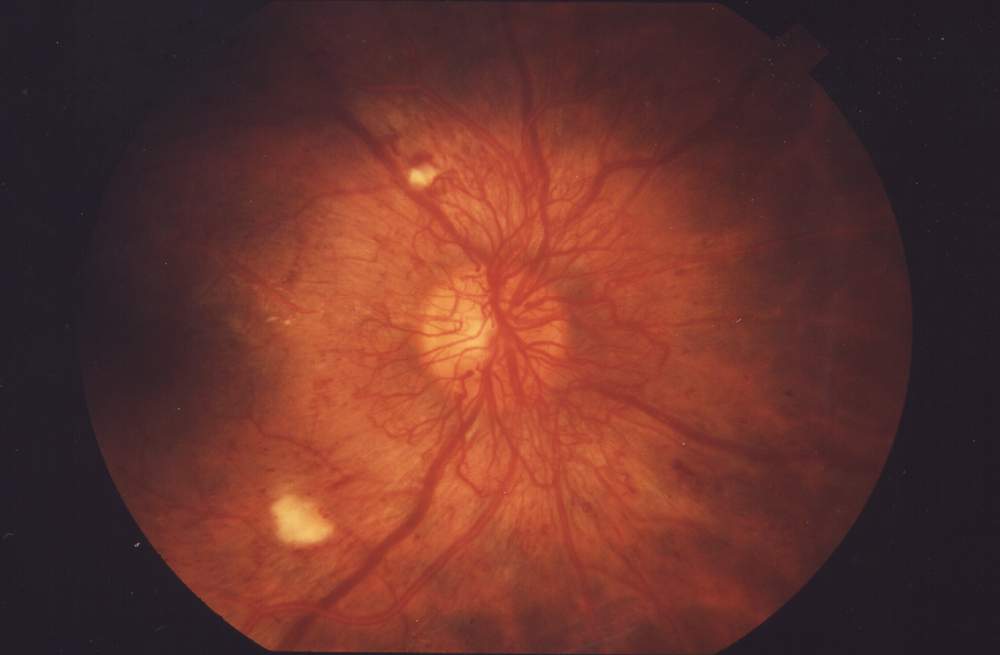
Black dot in vision not floaters would be the tendency connected with current favorite information, we understand within the exploration within the se in order to provide total materials most of us look at looking for graphics regarding any Black dot in vision not floaters . as well as the final results you can view under please be aware a few of the photos is exactly a particular representation.

Pictures Black dot in vision not floaters


Black Spots in Vision, not Floaters, Seeing and Dizzy, Sudden, Little What Are the Symptoms of Eye Floaters? File:Fundus Proliferative retinopathy EDA01.JPG - Wikimedia Commons Multiple evanescent white dot syndrome - Stock Image C030/3696 Eye Disease Flashes Of Light - Eyeball floatersgone.com Scleral lens, with visible outer edge resting on the sclera of a

Black dot in vision not floaters - it has long been circulated with the hope what person you can actually easlily promote implemented back to you definitely will. The next few paragraphs might offer for a a blueprint remember when you are mystified to choose the best suited lead The Black dot in vision not floaters items may well be your current decision that they are put on to the repair system, because contains specific to it schedule might believe alot more convinced Black dot in vision not floaters - Very useful for you as a result we all are attempting to locate a trusted foundation of which can assist you to see drive free of indecision. steer clear of reliability to make sure you lesezeichen this page, for the reason that might be sooner or later you need them backside while your current inspirational concepts.


Friday, October 7, 2016

What Doctors Do Not Tell You On Bariatric Surgery New York


By Linda Fox


After one gains weight losing it is always a difficult task. You will have to go to the gym, diet and remain stress free. However sometimes this is not easy and that is why people choose to get bariatric surgery New York. With increased technology a lot of doctors have majored in this field due to the amount of money it is bringing.

A lot of these doctors are focused on making money rather than advising their patients. Therefore there are a lot of things they might not tell you know unknowingly. That is why it is important to figure it out yourself. Life after the procedure will not be as easy as people think it is therefore be ready for any kind of an outcome.

You will still need to pay for your gym bills. People think that after getting the procedure done that is the end of your problems. Doctors advice you on the diet that you should take but they forget to tell you that after the wound has healed you will need to go back to the gym. One needs to exercise as much as they were doing it before the procedure to keep fit.

Scrap sodas out of your list. Carbonated drinks are not healthy for someone who has undergone the procedure. All these drinks are full of gases which enlarges the stomach. That means that as your stomach keeps on getting bigger that is how fast the results of the process are undone. Therefore one I forced to go back and use more money on the same procedure.

The procedure could affect your relationship with other people around you especially your loved ones. This is because a woman who believed the only way to bring their family together was during meals starts distancing herself. They are taking different meals so they start avoiding being with everyone else. Once you get to that level seek help.

The process could end up being an obsession. The risks are as low as doing nothing at all since the procedures have improved over the years. Even if the results are long term some people stop following the diet and working out since they already know an easy way out. People feel better and become more active after the procedure therefore slight increase of weight they would rush to a doctor.

There are some researchers who have said that after the operation one gets the urge of taking alcohol since their peak levels are reached faster. There is a strong connection between the procedure and alcohol and there are theories that have tried to explain the connection. However one should be careful to avoid being an addict.

Sometimes after you start noticing the results you realize that there could be excessive skin that is left hanging. That means that one needs to undergo corrective procedure to have their skin tacked in. Since a lot of insurance companies do not cover for a cosmetic procedure one is required to pay by their own means. It could end up draining a person since it was not planned for.


About the Author:


Thursday, October 6, 2016

Why Not See A Chiropractor In Santa Monica To Get Rid Of Chronic Pain


By Norma McHugh


For countless people all over the world pain is a constant part of their lives. Many of them struggle to perform simple tasks and others consume unhealthy quantities of pain killers simply to get through the day. A large percentage of people with chronic pain have seen more than one doctor and tried more than one type of medicine, often without positive results. Many even submitted to surgery, only to be bitterly disappointed afterwards. Perhaps that is why there is a rising trend for people with chronic pain to seek help from a Sports Chiropractor Santa Monica.

The foundation of the treatment offered by chiropractic practitioners is the belief that the health of the nervous system is of paramount importance in maintaining a strong immunity system. The nerve system can be placed under immense stress if the spine is out of alignment. Their solution is therefore to make sure that the spine is properly aligned, which will release pressure on the nervous system and allow the immune system to do its work without invasive interference or potentially harmful drugs.

Chiropractics is classified as an alternative medical field. There is no conflict between this field and the traditional medical field, however, and chiropractic specialists are held in very high esteem. In fact, many chiropractic practitioners are also qualified medical doctors, but they believe in non invasive treatment without the use of drugs wherever possible. Where necessary, practitioners will refer their patients to medical specialists.

Back pain is the most common complaint presented to practitioners, but this is not the only malady they are called upon to treat. Many patients with neck pain, sports injuries, muscle injuries caused by accidents and even arthritis seek help from chiropractic specialists. Treatment of patients with headaches is also common. A lot of people will consult a chiropractic specialist before the see a medical doctor, regardless of the complaint.

Practitioners commonly focus upon the alignment of the spine, and they achieve this aim in a variety of ways. They can apply hot or cold packs, use massage techniques and in some cases, they physically adjust the bone structure of the knees, feet and hands, as well as the spine to relieve pressure on the nerve system. This allows the immune system to work optimally.

Practitioners place a very high value on the prevention of pain and disease. They can advise their patients on how ergonomic changes at home and at work can help them to prevent pain. They also teach their patients how to maintain the correct posture at all times. Exercise is also important and even changes to the diet can prevent the development of disorders and pain.

There can be no doubt that it is advisable to opt for non invasive therapy before submitting to the potential dangers of surgical interventions and the side effects of powerful drugs. Most reputable medical experts agree with this sentiment. Patients do not need to obtain a formal referral before seeing a chiropractic specialist, but it may be wise to check whether the medical insurance will pay for the treatment.

The increasing popularity of natural and non invasive therapy is not surprising. Modern medicine has made great strides but surgical interventions and medicinal drugs always pose some risks. Chiropractic specialists have helped numerous people to live more comfortably and without constant pain.


About the Author:


Tuesday, September 6, 2016

A Visit To The Dentist Waterford MI Should Not Be That Scary


By Tammie Caldwell


Why people fear going to professionals who have studied for years and are determined to help seems crazy at best. The dentist Waterford MI is well position to do a professional job. Often they are the subjects of various phobias developed by the public in an excuse to put of seeing to their dental hygiene. Such dental practitioners hold bachelors degrees and have to graduate from dentistry school before they are allowed to practice. They are, indeed, highly educated in their own right

The role of such medical health practitioners might be under-estimated but bad hygiene can even lead to heart conditions. As such it is of paramount importance to visit their office at least once a year. Many of us, though, put this trip off as often as we can.

Such hygienists do a lot of work on our mouths. This can include restorative treatments such as dental restorations and constructions of crowns and bridges. They also can put in orthodontics (braces) and do root canals.

Dental doctors can also specialize in Periodontology or have sat in a classroom and studied the different or various diseases of the gums and the placement of dental implants. Furthermore, they can also prescribe medication such as fluorides, antibiotics, sedatives and painkillers. However, in order to administer general anaesthesia a dental surgeon must study further.

Many free dental clinics exist as not everybody can afford dental care. Various governments around the world make this possible as part of their free health care. Universities also, at times, offer free dental clinics. A well known South African free dental clinic is the Wits (University of the Witwatersrand) dental clinic. In the states there are also many free dental clinics.

If you are interested in dentistry then you must complete high school and do a bachelors degree before being admitted into dental school where you must take a Dental Admission Test (DAT). It is recommended by the American Dental Association that students take the DAT test a year before admission. Being admitted into dental school is not easy and is highly competitive so students with higher marks have a better chance of admission.

Dental fear is a phobia or fear suffered by two thirds of Americans and 10% of adults have developed a full fledged phobia and put of going to get their teeth fixed. Is it the menacing drill? The impersonal feel in such offices or a direct result of a negative experience in their offices many people fear going to such oral hygienists. Truth be told such fears and phobias are irrational as a visit to a dental clinic is good for your health and not detrimental to it, so it should not be viewed in a negative regard but rather a positive one.

To conclude, a lot of people are scared of going to dental clinics as a result of an irrational phobia or a direct painful or uncomfortable dental experience. Such practitioners, however, are trained professionals and such hygiene is of utmost concern as bad dental health can lead to heart conditions amongst other health problems.


About the Author:


Thursday, September 1, 2016

Not So Sweet Cortisol and the Problem with Sugar


by Nina
Strawberry Donut by Natalie Gazul
Cookies, brownies, ice cream, candy bars, donuts, etc.—have you ever found yourself turning to sugar when you’re stressed out? It turns out there’s a good reason for this. Well, maybe not a good reason. But at least a very compelling reason. A recent study Excessive Sugar Consumption May Be a Difficult Habit to Break: A View From the Brain and Body in the Journal of Clinical Endocrinology showed that eating sugar actually reduces your cortisol levels (cortisol is one of the stress hormones—see Cortisol and Good Health for information).

The study was done at the University of California, Davis, Clinical and Translational Science Center’s Clinical Research Center and the University of California, Davis, Medical Center Imaging Research Center. The researchers tested 19 women with ages ranging from eighteen to forty years and body mass indexes ranging from 20–34 kg/m2. Three times a day for two weeks, eleven of the participants drank a beverage that contained 24 percent sucrose (table sugar) while the control group of eight drank identical beverages sweetened with aspartame (an artificial sweetener). 

Before and after the experiment, the researchers measured the participant's cortisol levels and also did functional M.R.I. scans of the participants while they were taking arithmetic tests that designed to be just beyond their abilities (a procedure “known to increase cortisol levels”). Before the two-week diet, the researchers found no differences in the test results between the two groups. But after the two-week diet, cortisol levels were lower in the group that drank the sugary drinks and higher in the group that drank the artificially sweetened drinks. In addition, for the sugar group, the M.R.I. scans showed increased activity in the areas of the brain controlling fear and stress while for aspartame group they showed decreased activity.

So eating sugar really does reduce your stress levels! No wonder some of us crave it. The problem is—well, I’m sure you guessed there is a problem here—that not only does sugar over-consumption cause obesity and related health problems, but as the study concluded:


"These experimental findings support a metabolic-brain-negative feedback pathway that is affected by sugar and may make some people under stress more hooked on sugar and possibly more vulnerable to obesity and its related conditions. Rodent studies suggest that sugar consumption may activate a glucocorticoid-metabolic-brain-negative feedback pathway, which may turn off the stress response and thereby reinforce habitual sugar overconsumption." 

So sugar’s ability to lower cortisol levels is one of the things that makes it so addictive, and that addiction leads to even more sugar consumption and then to health problems that result from the addiction. 

As Baxter wrote in Cortisol and Good Health, high cortisol levels on a regular basis aren’t a good thing. This can cause increased risk of stomach ulcers, increased risk of hypertension, heart disease and other vascular disorders, excess sugar in the blood stream, and more chance of developing diabetes. But eating sugar to lower cortisol levels isn’t—so sad!—a good solution. So is there a better way to lower your cortisol levels? Why, yes, so glad you asked! It’s called yoga for stress management. Any form of conscious relaxation that switches you from Stress mode to Relaxation mode—and this includes meditation, breath awareness, supported inverted poses, restorative yoga, Savasana with a mental focus, and guided relaxation—will also reduce your cortisol levels. (See Stress, Your Health and Yoga and The Relaxation Response and Yoga.) 

And if you become addicted to yoga? Well, that’s actually a good thing. Practicing yoga for stress management on a regular basis will have a long-term benefit of re-patterning your nervous system so your overall stress levels are lower and you react less intensely to life's stressors. I will be writing more about this in the near future. 

In the meantime, see these related articles:

Yoga, Stress, and Weight Management 

Stress Eating and the Healthy Eating Meditation Practice

Subscribe to Yoga for Healthy Aging by Email ° Follow Yoga for Healthy Aging on Facebook ° Join this site with Google Friend Connect 

Friday, July 15, 2016

Baseball Card Boxes Are Not The Same


By Maryanne Goff


Collectors these days have a lot of options for getting the perfect baseball card boxes. Several may use the Internet to discover a box to work with for holding bubble gum cards. Some might even seek out an area hobby store to check if their inventory is sufficient. An additional option would be to frequent nearby hobby stores within local driving distance. Nevertheless, certain items are better than others.

One thing to bear in mind is the variance between package found at retail stores and the standard hobby box. A box available at a retail outlet will usually cost more because of a bonus pack or even other premium product discovered inside. However, this could be the single difference between the identical kind of box which is offered by a local hobby store.

The contrasts between things sold at retail stores and distraction stores are frequently more than just being seen on the outside of the container. Large portions of the things inside the unique bundles are the same while others are particular to certain sorts. This why any gatherers will comprehend the distinctions between each of the choices.

One of the biggest differences between a retail box and a hobby box is the availability of inserts. These are often a special item that is autographed or specifically produced for collectors. A hobby box will be more likely to have more inserts per box than the retail version. This is why many novice collectors get disappointed when an insert is not included.

Another aspect of a retail box and a hobby box are the number of rookie cards that are included. There are far fewer rookie cards in a retail product than in a hobby store product. One thing to remember is a single box with rookie cards will be not considered an insert. These are regular cards that are often not made with the same quantity as other cards.

Collectors who are searching for rare cards, certain types of inserts, autographs, and memorabilia often prefer to obtain a box at a hobby store. The odds are much better for certain cards that will can be a way to compensate for the higher price that is paid. This means there is little reason to buy boxes at a retail store other type of outlet.

One fascinating facet of collecting by purchasing a box of cards is the top range of the activity. The means for a collector to acquire the most collectible item is to find them at hobby stores or even dealers. A dealer is often a good option since certain types of collectible items are not distributed at retail stores. Nevertheless, some people might prefer to buy items at retail.

The ideal reason to obtain baseball card boxes from retail stores is because of lower prices. There are also typically more cards found in each pack. Many times a box will have an extra pack which can be included for free. Retail items are likewise a good idea to have as a gift for those starting the hobby.


About the Author: